The Hidden Problem Behind Every Rebrand
Your packaging changed. Now everything else is broken.
When a brand announces a rebrand, it’s positioned as a step forward — a cleaner identity, smarter positioning, refreshed design. But behind the scenes, teams are scrambling because updating packaging isn’t just a creative decision. It’s a massive operational lift.
Every visual touchpoint needs to be rebuilt - fast. But most systems aren’t built for this kind of speed, volume, or precision. That’s why even the best rebrands stall before they ever reach the market.Your packaging changed. Now everything else is broken.
When a brand announces a rebrand, it’s positioned as a step forward - a cleaner identity, smarter positioning, refreshed design. But behind the scenes, teams are scrambling because updating packaging isn’t just a creative decision. It’s a massive operational lift.
Every visual touchpoint needs to be rebuilt - fast. But most systems aren’t built for this kind of speed, volume, or precision. That’s why even the best rebrands stall before they ever reach the market.
The real cost: more assets than you think
A rebrand doesn’t just update how your product looks. It forces you to recreate how it shows up everywhere.
Product pages
Ads
Emails
Social content
Retail kits
Press
Internal & external decks
Each SKU needs to be shot in multiple angles, each image formatted for multiple platforms, and every version needs to be localized for different markets and retailers.
And it all needs to be coherent. Not just in style - in lighting, framing, finish, tone. Everything needs to be on-brand.
Suddenly, a new label or pack shape means building thousands of assets under pressure, across siloed teams, with no margin for delay.
Why shoots break under pressure
Photoshoots work when you’re producing a few hero visuals not when you’re updating hundreds of assets across dozens of SKUs.
They’re built for static needs, not changing inputs. They assume final packaging, clear timelines, and stable requirements. But rebrands rarely work that way. Artwork shifts late. Claims evolve. Variants are added. Retailers ask for new formats. And internal teams need visuals long before the product is even in-hand.
Each change forces another round of edits or reshoots. And by the time the final image is ready, it’s already out of date.
This isn’t a creative issue. It’s a production system problem and legacy workflows can’t keep up.
How top brands handle the chaos
Leading brands have stopped treating rebrands as one giant shoot. They’ve started treating them like a system.
Instead of waiting until everything is final, they begin building visual infrastructure in parallel.
The moment packaging is approved, a new pipeline starts: one that’s digital, flexible, and built to adapt on demand.
So when the label changes or the format updates, you don’t start from scratch. You update the system and it updates everything else.
This shift isn’t just about process, it’s about tools. At the center of that system is one core asset: the Digital Twin.
What a Digital Twin actually is
A Digital Twin is a true-to-life, photorealistic 3D model of a physical product that mimics its real-world counterpart - not just in form but often in behavior and context.
It’s not a mockup. It’s a living asset:
Built from your dielines, labels, materials, and finishes
Ready for any format - PDPs, paid ads, CRM, retail, social
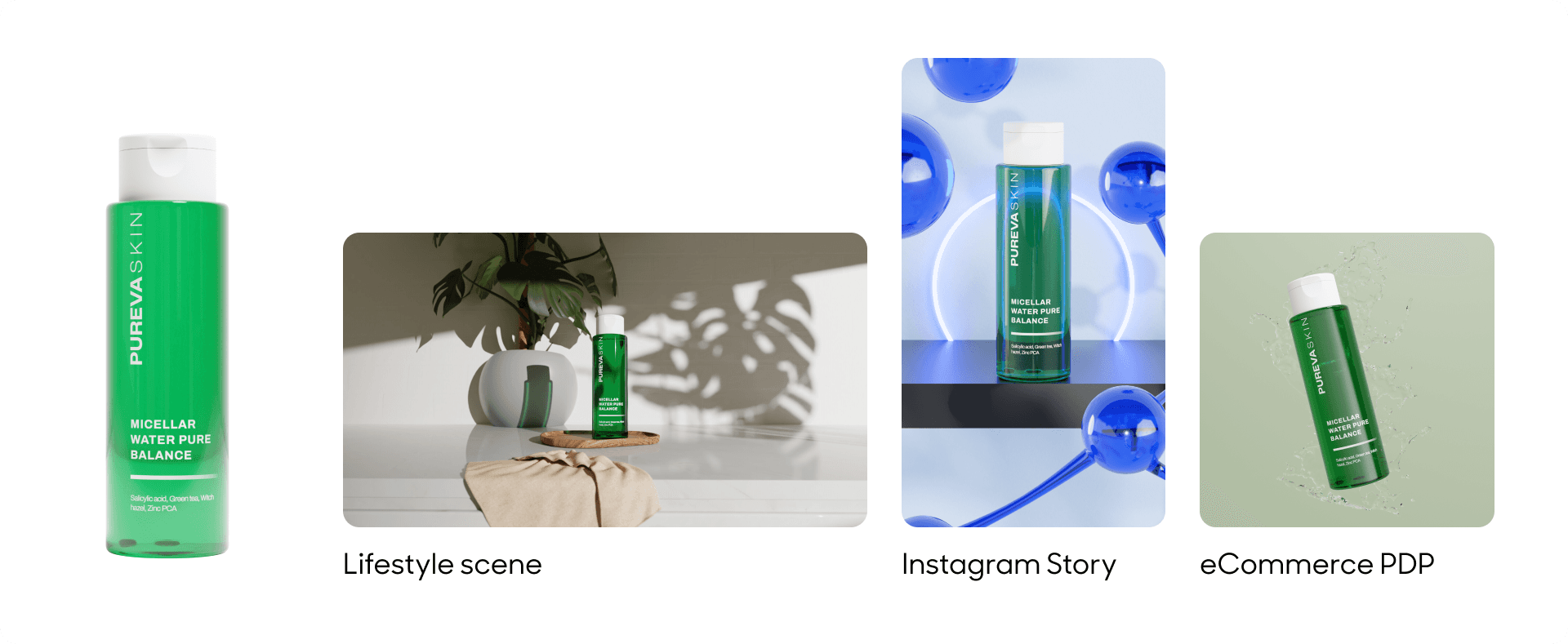
Fully adaptable - change the label once, and the visual updates instantly
Think of it as the master source - your product, ready for every market, every variant, every platform, without a single reshoot. It’s not just faster. It’s infinitely more flexible.
Rebrand once. Deploy everywhere.
In traditional workflows, every asset is built as a one-off. That’s what slows everything down.
Every format, every channel, every version — rebuilt from scratch, every time.
That’s where rebrands break.
With a Digital Twin–powered system, one approved product becomes the source of truth for everything downstream.
The Digital Twin is created once
Visuals are generated instantly across all channels
Packaging is finalized
Market, claim, and variant changes are handled in parallel
Every touchpoint stays on-brand, all the time
No scrambling. No reshoots. No bottlenecks. Every team gets exactly what they need, the moment they need it.

Show the full story, not just the hero
Rebrands are rarely about a single product. They're about the full portfolio.
How each pack relates to the rest
How design language travels across formats
How the system flexes across categories, SKUs, and sizes
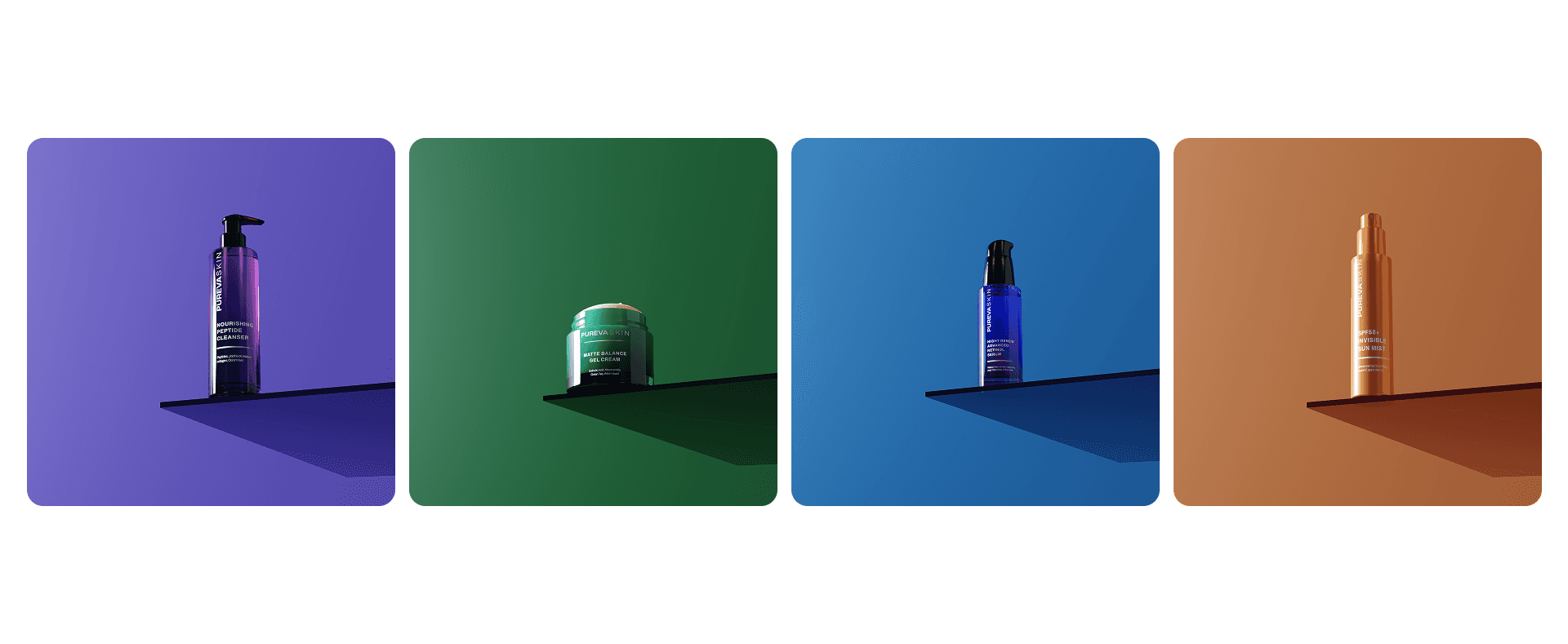
With Digital Twins, you can visualize the entire range as one unified story in matching environments, lighting, and quality.
That’s what delivers a premium experience. Not just better visuals but better brand storytelling, built from the full picture.
Speed is the advantage
In fast-moving categories, timing is everything. The brands that win rebrands aren’t the ones with the flashiest designs - they’re the ones that launch flawlessly, everywhere, all at once.
No delays. No mismatched assets. No missed channels. Just fast, coordinated execution across markets, platforms, and teams.
When production is built into your system, not bolted on at the end, you unlock the ability to go live when your brand is ready, not when the studio is.
Rebrands Never Really End
Today, packaging is in constant motion:
Market-specific edits
Regulatory updates
Retail exclusives
Seasonal campaigns
New claims
Shade or flavor extensions
In the old model, each of these changes meant a new photoshoot. New angles. New retouching. New everything.
In the new model? The Digital Twin evolves and so do your assets. Instantly.
That’s what turns your rebrand into infrastructure. It’s not a one-off sprint, but a system that scales with you.
This should be your best chapter, not the hardest
A rebrand should feel like momentum. A signal of what’s next and not a three-month scramble to rebuild what already existed.
With the right content pipeline, your rebrand becomes a launchpad: faster, more consistent, and infinitely more flexible.
This is how the leading brands are rebranding in today’s age and it’s how you stay ahead of what’s coming next.
Update Product Visuals Instantly, Without a Reshoot

About the author